












What Does a 3,000 mm Waterproof Rating Actually Mean? Hydrostatic Head Explained
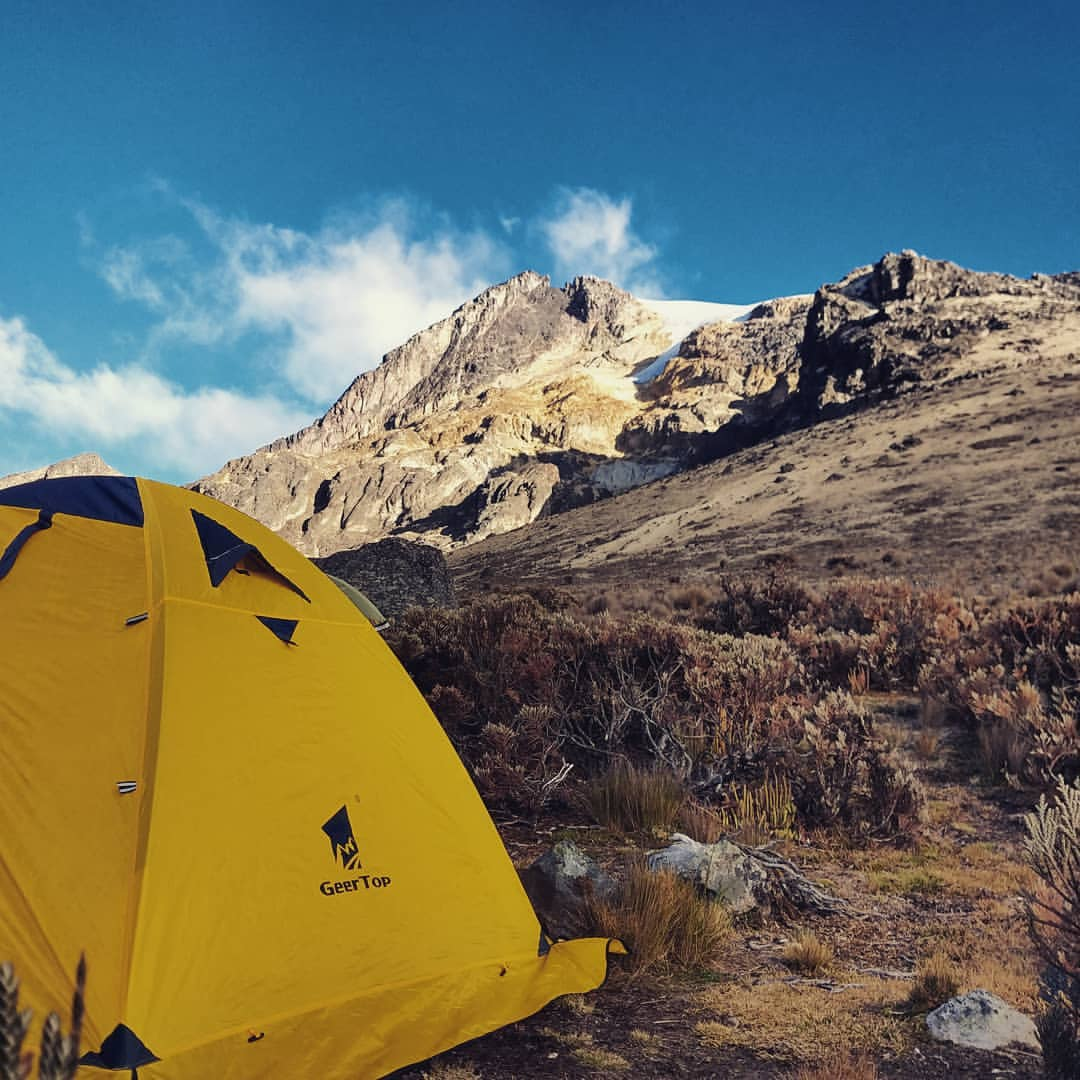
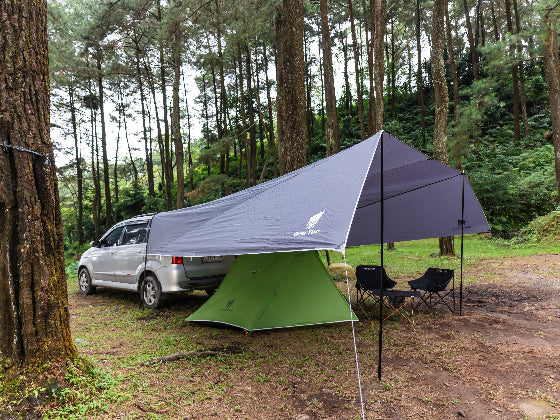
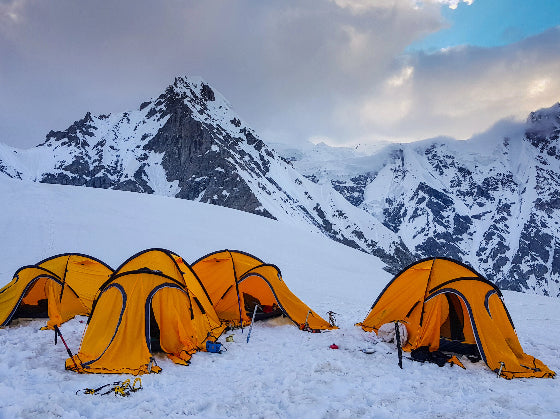
 Photo 1: A taut, full-coverage rainfly in the mountains — the first line of defense; even the highest rating fails if the fly sags.
Nearly every tent listing claims "waterproof to 3,000 mm" — but what does that number actually measure? The hydrostatic head (HH) rating tells you how tall a column of water a fabric can hold back before it leaks: tested per ISO 811 (AATCC 127 is the US equivalent), a 3,000 mm fabric supports a ten-foot column of water without a drop coming through — roughly 4.3 psi of pressure. Three rules of thumb cover most situations. First, a 1,500–3,000 mm rainfly handles sustained rain; 3,000 mm and up covers driving storms. Second, the floor needs a much higher rating (5,000 mm recommended) because kneeling on fabric creates point pressure equal to about 2,000 mm of water column. Third, every PU coating loses waterproofness to UV, abrasion, and hydrolysis over the years — and without factory-taped seams, the needle holes leak first. For anyone camping from the Pacific Northwest drizzle to Appalachian summer thunderstorms, a 3,000 mm fly over a 5,000 mm floor is the safe baseline.
The rain conditions that actually test the number
A rating only matters against real weather. Four classic US rain scenarios and what they demand:
- Pacific Northwest multi-day drizzle: moderate intensity but constant wetting — below 1,500 mm the fabric saturates and starts weeping through.
- Gulf Coast and Southeast downpours: inches per hour with violent drop impact — you want 3,000 mm and cleanly taped seams.
- Cool mountain nights in the Rockies or Appalachians (40–50 °F): rain meets a cold tent and condensation becomes the main enemy — ventilation matters as much as coating.
- Saturated ground and pooling water: groundwater pushes up from below — below a 5,000 mm floor, your sleeping pad is wet by dawn.
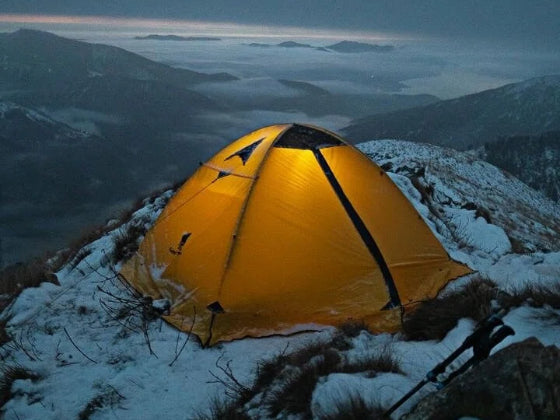
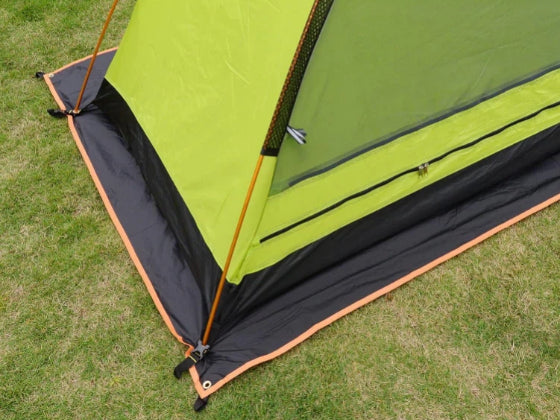
 Photo 2: Water beading on PU 3,000 mm fabric with a taped seam — the beading comes from the DWR finish; the coating and seam tape do the actual sealing.
Reading the numbers: the hydrostatic head chart
Hydrostatic head translates directly into use cases: under 1,000 mm means splash protection only; 1,000–1,500 mm handles brief showers; 1,500–3,000 mm is the mainstream range for backpacking rainflies and holds sustained rain; 3,000–5,000 mm covers heavy rain and wind; above 5,000 mm matters mainly for floors and footprints, because body pressure (a knee at roughly 2,000 mm point load, sitting or lying several hundred mm) literally squeezes water through the weave. Three details count as much as the number: seams must be factory-taped or they stay the first leak path; DWR (durable water repellent) is only a surface finish — when it wears off the fabric wets out and gains weight but still keeps you dry if the coating is intact; and the advertised rating is a factory value — after two or three years of UV and storage, expect real-world performance well below it.
Table 1: Hydrostatic head classes and what they handle
|
Rating |
Withstands |
Typical use |
|
under 1,000 mm |
splashes, mist |
beach shelter, sun shade |
|
1,000–1,500 mm |
brief showers |
summer festival tent |
|
1,500–3,000 mm |
sustained rain |
backpacking rainfly |
|
3,000–5,000 mm |
heavy rain, wind |
4-season tent, exposed camps |
|
over 5,000 mm |
wet ground, body pressure |
tent floor, footprint |
What does a properly waterproof tent cost?
In the US, a decent 2-person tent with a 1,500 mm fly starts around $80–150; the 3,000 mm fly / 5,000 mm floor class typically runs $130–350; true 5,000 mm mountaineering tents cost more. Concrete reference prices from the official shop: the Toproad 2 (2-person, 4-season, PU 3,000 mm fly, PU 5,000 mm floor, aluminum poles) is listed at $149.99; the ultralight PU 3,000 mm tarp with detachable side wall at $49.99; the 210D footprint (PU 5,000 mm, 10 ft × 7.2 ft) at $14.99. The smart budget rule: instead of paying extra for a marketing 8,000 mm claim, invest in the 3,000 mm fly + 5,000 mm floor + fully taped seams combo, and protect the floor with a $15 footprint.
Where to buy: outdoor retailer, online, or direct
Outdoor retailers (REI, local gear shops) let you inspect coatings and seam tape in person; Amazon and online retailers ship fast with easy returns; the official brand shop documents the rating for each component (fly, floor, footprint) and ships free from a US warehouse in 3–5 business days:
Table 2: Buying channels for waterproof tents in the US
|
Channel |
Biggest advantage |
Delivery |
Returns / warranty |
|
Outdoor retailer (REI, local shops) |
inspect seams and coating in person |
same day |
in-store exchange |
|
Amazon / online retailers |
selection, reviews, price |
1–3 days |
30-day returns typical |
|
Official GeerTop shop |
per-component ratings documented |
free from US warehouse, 3–5 business days |
30-day returns, 180-day tent warranty |

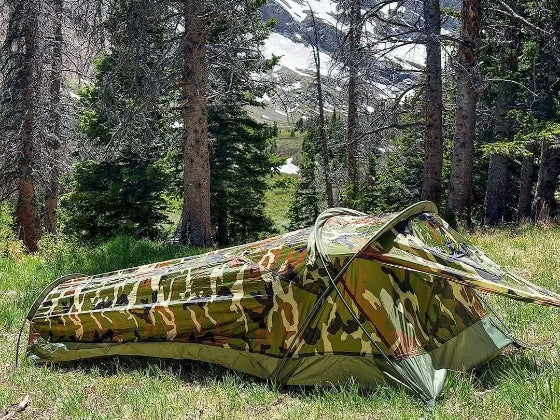
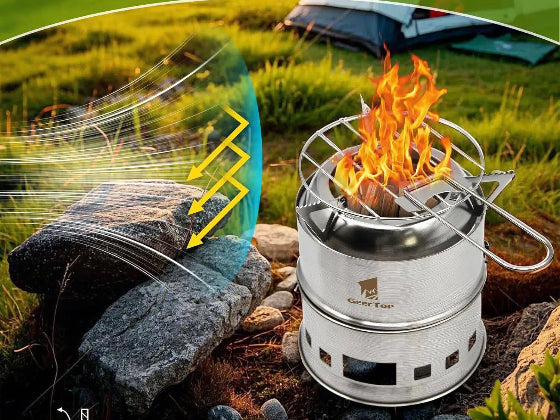
Photo 3: Rainfly and floor listed with separate ratings (PU 3,000 mm / PU 5,000 mm) — always check both numbers before buying.
Keeping the coating waterproof for years
- Always store the tent bone dry: moisture in the stuff sack triggers hydrolysis — the PU layer turns sticky and porous, the number one cause of lost waterproofness.
- Limit UV exposure: coatings age visibly faster in midday sun; shade the tent or take it down during long stays.
- When water stops beading, refresh the DWR: clean the fabric, spray on a DWR treatment, let it cure.
- Re-seal peeling seam tape with seam sealer (about $8–12 a tube) — enough to save a season.
- Never machine wash: hand wash with a soft brush and mild soap; a footprint takes the ground abrasion and extends the life of the 5,000 mm floor.
Why our numbers are checkable
We test tents in real rain — with logged interior humidity and seam-by-seam inspection — and we always separate our field measurements from lab values. GeerTop publishes the hydrostatic head per component rather than as a single marketing figure: the Toproad 2 is rated PU 3,000 mm on the fly and PU 5,000 mm on the floor, the tarp PU 3,000 mm, the footprint PU 5,000 mm. Every claim can be checked against the class table above instead of trusting a generic "waterproof" label.
FAQ | Common questions
Q: Is 3,000 mm really enough?
A: For the vast majority of trips, yes: sustained rain and summer thunderstorms are no problem on a taut tent with taped seams. The sensitive points are ground water and wind load — hence a 5,000 mm floor and full guying.
Q: Why is the floor rated higher than the fly?
A: Because your body presses water through the fabric: a knee creates point pressure equal to roughly 2,000 mm of water column, plus ground moisture pushing from below. The fly only sheds raindrops; the floor carries weight — hence the 5,000 mm threshold.
Q: Does a tent lose waterproofness over time?
A: Yes. UV, abrasion, and hydrolysis from damp storage degrade the PU coating; after two to three years the real-world value often sits well below the factory figure. Dry storage and a fresh DWR treatment slow it down noticeably.
Q: Are drops inside the tent a leak?
A: Usually not: condensation from breath and temperature differences settles evenly on the inner wall. A true leak beads at a single point — a seam or a tear. Against condensation: ventilate; against leaks: seam sealer.
Q: What is the difference between DWR and waterproof coating?
A: DWR only makes water bead on the surface; the actual waterproofness comes from the PU or silicone coating that provides the hydrostatic head. When DWR wears off the fabric wets out and gets heavy, but it still does not leak while the coating is intact.
Q: Why do seams leak first?
A: Every needle stitch perforates the fabric; without heat-applied seam tape, water follows the thread. When buying, check that the tape is smooth, bubble-free, and continuous.
Q: What rating does a tarp need?
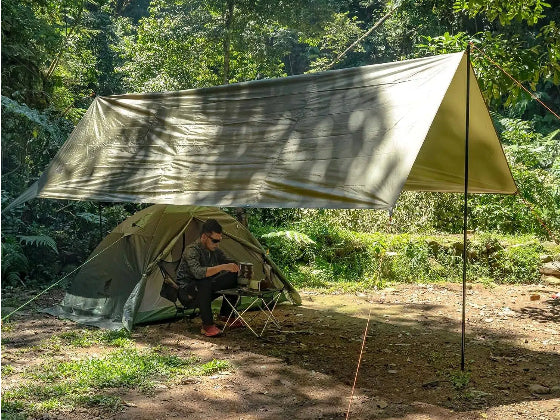
A: A tarp sheds rain off its slope and carries no load: 1,500–3,000 mm is plenty. A PU 3,000 mm tarp with taped seams (about $50) covers long rainy camps with ease.
Next step
Buy by the numbers, not the slogans: the official GeerTop shop lists hydrostatic head, denier, and seam construction for every model (Toproad 2: PU 3,000 mm fly / PU 5,000 mm floor). On YouTube (@Geertop) you will find real setup and rain-test footage.