









If you love road trips, overlanding, and outdoor adventures, you may have wondered: Are rooftop tents worth it?
Rooftop tents have become a popular camping option for SUV owners, truck enthusiasts, and travelers who want a more convenient way to camp. Unlike traditional ground tents, rooftop tents are mounted on a vehicle's roof rack, creating an elevated sleeping space that can be set up at suitable campsites.
But are they really worth the investment?
The answer depends on your vehicle, camping habits, budget, and personal preferences. In this guide, we'll explore the advantages and disadvantages of rooftop tents, compare them with traditional camping tents, and explain what to consider before buying one.
1. What Is a Rooftop Tent?
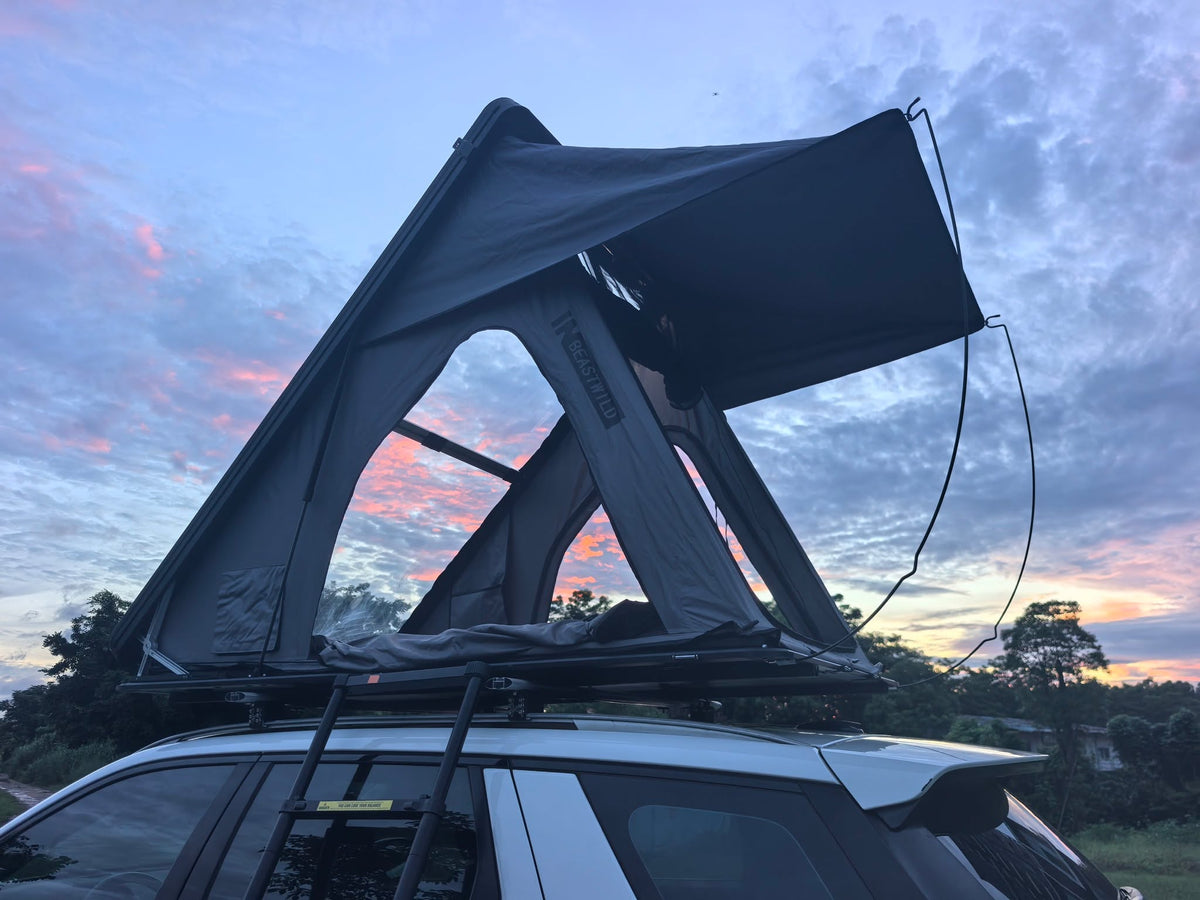
A rooftop tent is a portable camping shelter designed to be mounted on a vehicle's roof rack or compatible crossbars.
Unlike a traditional ground tent, it provides an elevated sleeping area above the ground. Most rooftop tents include a built-in mattress, a folding or hard-shell structure, and a ladder for access.
There are two main types:
Hard Shell Rooftop Tents
Hard shell rooftop tents feature a rigid outer shell, commonly made from aluminum, fiberglass, or other engineered materials.
They are designed to provide a protective exterior when closed. Depending on the opening mechanism, some models can be deployed quickly with gas struts or other assisted systems.
Common advantages include:
-
Streamlined storage when closed.
-
Convenient setup and pack-down on many models.
-
A rigid protective outer shell.
-
Various designs for different vehicle types and camping needs.
Soft Shell Rooftop Tents
Soft shell rooftop tents typically use a folding frame covered with weather-resistant tent fabric.
They often unfold into a larger sleeping area and may offer more flexible layouts.
Common advantages include:
-
A fold-out design that can provide additional sleeping space.
-
Flexible configurations.
-
A wide range of sizes and accessories.
Both types have their own strengths. The best choice depends on how frequently you camp, how much space you need, and what features matter most to you.
2. The Main Benefits of Rooftop Tents
Why do so many outdoor enthusiasts choose rooftop camping?
Here are some of the main benefits.
2.1 An Elevated Sleeping Space
One of the biggest attractions of a rooftop tent is its elevated sleeping position.
Because the tent is mounted on your vehicle, you don't need to sleep directly on the ground.
This can help you avoid some common ground-camping inconveniences, such as uneven surfaces, mud, and wet grass.
However, a rooftop tent still needs a suitable parking and camping location. You should always park on stable, level ground and follow the manufacturer's setup instructions.
2.2 A Convenient Camping Setup
Many hard shell rooftop tents are designed to simplify the camping process.
Instead of unpacking a tent, assembling poles, and finding a suitable sleeping area on the ground, you can open the rooftop tent and prepare your sleeping space.
The actual setup time depends on the tent's design, accessories, and your experience.
For people who frequently take weekend road trips, this convenience can make camping more enjoyable.
2.3 More Organized Camping Equipment
A rooftop tent provides a dedicated sleeping area, leaving more room inside your vehicle for other camping essentials.
You can organize your storage space for:
-
Cooking equipment.
-
Camping chairs and tables.
-
Food and water supplies.
-
Outdoor clothing.
-
Hiking and adventure gear.
This can be particularly useful for SUV and truck owners who travel with multiple people or carry a lot of equipment.
2.4 More Flexibility for Road Trips
Rooftop tents are especially appealing to people who enjoy traveling between different destinations.
You can take your sleeping setup along with your vehicle instead of carrying a separate tent in your luggage.
For road trips, overlanding, and weekend camping, this can create a more flexible outdoor travel experience.
Remember that you still need to choose legal and designated camping locations where vehicle-based camping is permitted.
3. The Disadvantages of Rooftop Tents
Although rooftop tents offer several advantages, they are not perfect for everyone.
Before making a purchase, consider these potential drawbacks.
3.1 Higher Initial Cost
Rooftop tents generally cost more than many traditional ground tents.
In addition to the tent itself, you may need to purchase compatible roof racks, mounting hardware, or other accessories.
Your total investment may include:
-
Rooftop tent.
-
Compatible roof rack or crossbars.
-
Mounting brackets and hardware.
-
Optional awnings and accessories.
If you only camp once or twice a year, a traditional ground tent may be a more economical option.
3.2 Vehicle Compatibility Matters
Not every vehicle can safely carry every rooftop tent.
Before purchasing, you need to check:
-
Your vehicle's roof load capacity.
-
The roof rack or crossbar load rating.
-
The rooftop tent's weight.
-
The manufacturer's mounting requirements.
One important distinction is dynamic load capacity versus static load capacity.
Dynamic load capacity refers to the load permitted while driving. Static load capacity refers to the load supported when the vehicle is stationary.
These are not interchangeable.
You must follow the vehicle manufacturer's and roof rack manufacturer's limits, along with the rooftop tent installation requirements. Never assume that a vehicle can support a tent simply because it has roof rails.
3.3 Additional Vehicle Height and Weight
A rooftop tent adds weight and height to your vehicle.
This can affect fuel consumption, handling, clearance, and vehicle performance.
Before driving, consider:
-
Parking garage height restrictions.
-
Low bridges and overhead obstacles.
-
Vehicle roof load limits.
-
Wind exposure while driving.
-
Changes in fuel efficiency.
A low-profile rooftop tent may help reduce the additional height when properly installed, but the actual dimensions of the complete setup should always be checked.
3.4 Getting In and Out Requires a Ladder
Unlike a ground tent, a rooftop tent requires a ladder to access the sleeping area.
This may be less convenient for some people, especially young children or anyone who has difficulty climbing.
If you frequently camp with children or older family members, consider the ladder design, access height, and overall sleeping arrangement before buying.
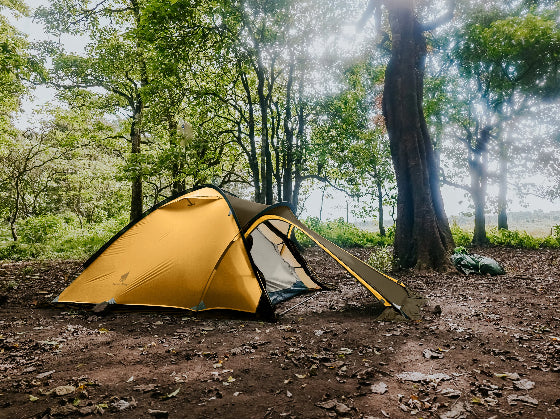
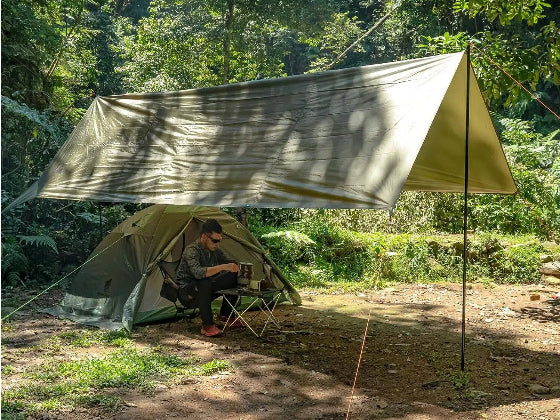
4. Rooftop Tent vs. Ground Tent: Which Is Better?
Both rooftop tents and traditional ground tents can be excellent camping shelters.
The right option depends on your travel style and budget.
| Comparison | Rooftop Tent | Ground Tent |
| Setup | Depends on model; many hard shells open quickly | Requires pitching and setup |
| Sleeping position | Elevated above the ground | On the ground |
| Vehicle required | Yes | No |
| Storage | Mounted on the vehicle | Packed separately |
| Initial investment | Usually higher | Usually lower |
| Mobility | Travels with your vehicle | Can be carried separately |
| Vehicle compatibility | Must check roof load and rack requirements | No roof rack required |
| Best for | Road trips and vehicle-based camping | Backpacking and flexible camping |
Which should you choose?
Choose a rooftop tent if you:
-
Frequently travel by SUV, truck, or off-road vehicle.
-
Enjoy road trips and vehicle-based camping.
-
Prefer an elevated sleeping space.
-
Want a dedicated sleeping setup that travels with your vehicle.
Choose a ground tent if you:
-
Have a limited camping budget.
-
Prefer backpacking or hiking.
-
Want a lightweight and portable shelter.
-
Don't want additional equipment mounted on your vehicle.
Neither option is universally better. Your camping habits should determine your choice.
5. How to Choose the Right Rooftop Tent
If you decide that a rooftop tent is worth considering, the next step is choosing the right model.
Here are five important factors.
5.1 Choose the Right Tent Type
Start by comparing hard shell and soft shell rooftop tents.
If you prioritize a rigid outer shell and a convenient opening design, consider a hard shell model.
If you need a fold-out layout and potentially more flexible sleeping space, a soft shell model may be worth exploring.
5.2 Consider the Number of Occupants
Think about how many people will regularly sleep inside the tent.
A two-person rooftop tent may be suitable for couples or solo travelers who want extra sleeping room.
Larger models may be more appropriate for families or groups.
Always check the actual interior dimensions rather than relying only on the advertised sleeping capacity.
5.3 Check Vehicle and Roof Rack Compatibility
This is one of the most important buying considerations.
Before ordering, confirm:
-
The tent's total weight.
-
Your roof rack's load rating.
-
Your vehicle's dynamic roof load limit.
-
The compatibility of mounting hardware.
-
The available roof space and crossbar spacing.
If you're unsure, contact your vehicle or roof rack manufacturer for confirmation.
5.4 Pay Attention to Materials and Construction
The materials used in a rooftop tent influence its weight, durability, weather resistance, and maintenance requirements.
Consider the following:
-
Shell material and structural design.
-
Tent fabric and waterproof specifications.
-
Zipper and hardware quality.
-
Ventilation and condensation management.
-
Mattress thickness and sleeping comfort.
Don't choose a tent based on appearance alone. Check the actual specifications and product documentation.
5.5 Consider Your Camping Environment
Think about where you plan to camp.
For example:
-
Summer road trips may require good ventilation and sun protection.
-
Rainy environments require suitable waterproof construction and proper weather protection.
-
Cold-weather camping requires appropriate insulation, bedding, and preparation.
-
Remote overlanding may require a durable setup suited to your vehicle and travel conditions.
There is no single rooftop tent that is ideal for every environment.
6. Are Hard Shell Rooftop Tents Worth the Extra Money?
For many vehicle-based campers, hard shell rooftop tents are worth considering because of their rigid exterior structure and convenient opening designs.
However, a higher price does not automatically mean a better product.
When comparing models, look at:
-
Overall weight and dimensions.
-
Shell construction.
-
Opening and closing mechanism.
-
Interior sleeping space.
-
Ventilation design.
-
Mounting system.
-
Warranty and after-sales support.
If you frequently travel and camp, investing in a suitable hard shell rooftop tent may provide greater convenience over time.
If you camp occasionally, a less expensive camping setup may be more practical.
The key is to compare the total cost with how often you will actually use the product.
7. Is a Rooftop Tent Worth It for Your Camping Lifestyle?
A rooftop tent is particularly suitable for people who enjoy vehicle-based adventures.
Here are some examples.
Weekend Road Trips
If you regularly take weekend trips, a rooftop tent can provide a convenient sleeping setup without needing to pack and pitch a traditional tent every time.
Overlanding Adventures
For people who travel long distances in SUVs and trucks, rooftop tents can create a dedicated sleeping area that moves with the vehicle.
Couples Camping
A two-person rooftop tent can be an attractive option for couples who enjoy exploring outdoor destinations together.
Scenic Camping and Stargazing
Some rooftop tent designs include panoramic viewing panels or skylights, allowing campers to enjoy more natural light and views of the night sky.
The experience depends on the tent's actual design and the surrounding environment.
8. Explore GEERTOP Rooftop Tents
Choosing the right rooftop tent is about finding a balance between comfort, vehicle compatibility, construction, and your camping style.
At GEERTOP, you can explore different rooftop tent designs for vehicle-based camping and outdoor adventures.
Whether you're looking for a compact hard shell rooftop tent, a larger sleeping space, or a distinctive panoramic design, compare the available specifications to find a model that matches your needs.
Before purchasing, make sure to review the product dimensions, weight, mounting requirements, and vehicle compatibility.
Ready to explore your options?
Discover the GEERTOP Rooftop Tent Collection and find a rooftop tent for your next outdoor adventure.
9. Frequently Asked Questions About Rooftop Tents
Are rooftop tents worth the money?
Rooftop tents can be worth the investment if you frequently enjoy road trips, overlanding, or vehicle-based camping. They offer an elevated sleeping area and can simplify the camping setup. However, occasional campers may find traditional ground tents more economical.
Can any car have a rooftop tent?
No. Your vehicle must have a suitable roof structure and compatible roof rack or crossbars. You must also check the vehicle's dynamic roof load limit, the rack's rating, and the tent's mounting requirements.
Do rooftop tents affect fuel economy?
Yes, a rooftop tent can increase aerodynamic drag and vehicle weight, potentially increasing fuel consumption. The actual impact depends on the vehicle, tent design, driving speed, and road conditions.
Are hard shell rooftop tents better than soft shell rooftop tents?
Not necessarily. Hard shell models often provide a rigid exterior and convenient opening mechanisms, while soft shell models may offer flexible fold-out layouts and additional sleeping space. The best option depends on your needs and budget.
Can you leave a rooftop tent on your vehicle all year?
Some owners leave their rooftop tents mounted throughout the year, but this depends on the product, vehicle, weather exposure, and manufacturer recommendations. Regularly inspect the mounting hardware, seals, fabric, and shell, and follow the recommended storage and maintenance instructions.
How long does it take to set up a rooftop tent?
Setup time varies by model. Many hard shell rooftop tents are designed for relatively quick deployment, while soft shell models may require additional unfolding and securing steps. Check the manufacturer's instructions for the specific model.
Final Thoughts
So, are rooftop tents worth it?
If you frequently travel by vehicle, enjoy outdoor adventures, and value a convenient elevated sleeping space, a rooftop tent may be a worthwhile investment.
The most important thing is choosing a model that fits your vehicle, camping habits, and budget.
Take time to compare the available designs, check compatibility, and understand the specifications before making your decision.
Happy camping and enjoy the journey!