










One Tent Costs $170. The Other Costs $860. Both Have Been to the Himalayas.
Here's the question that keeps showing up in mountaineering forums: can a $170 tent really compete with one that costs $860? When both have verified high-altitude credentials, the answer gets interesting fast.
Four-season tent technology has been filtering down to mid-tier price points throughout 2026, and that shift makes this comparison more relevant than ever. The two contenders: the Geertop Navigator 2, a factory-direct 4-season mountaineering tent priced at $169.99 to $199.99, and the MSR Remote 2, a legacy alpine shelter from one of the most recognized names in outdoor gear, at $860.
What follows is a direct, honest comparison covering specs, field performance, use-case fit, and value. No brand pitch. Just a clear verdict to help you decide where your money goes.
Spec-by-Spec: Geertop Navigator vs MSR Remote 2
Numbers don't lie, so let's start there.
- Packed weight: Geertop Navigator at 3.2 kg (roughly 7 lbs) vs. MSR Remote 2 at 4.5 kg (roughly 9.9 lbs). That's a 2.9 lb advantage for the Navigator.
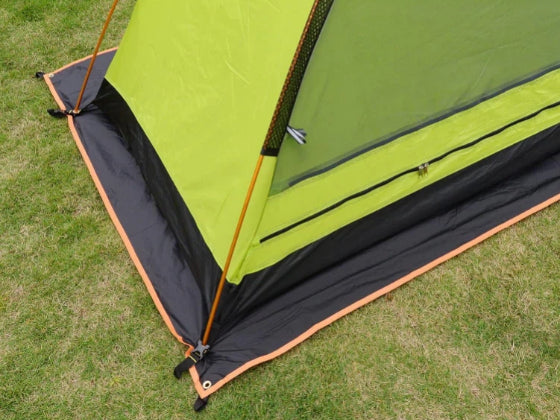
- Waterproofing: Navigator outer fabric is rated PU8000mm on 20D nylon, with a PU5000mm polyester floor. The MSR uses a proprietary DuraShield-coated bathtub floor. In practical terms, PU8000mm means the Navigator's fly can handle sustained, driving rain and wet snow without seepage. MSR doesn't publish a millimeter rating, relying instead on their proprietary coating's reputation.
- Floor area: Navigator offers 210 x 120 cm of interior space with 110 cm of head height. The MSR Remote 2 provides 33 sq ft of floor area.
- Vestibule: Navigator has a 100 cm gear vestibule extension. The MSR features a large hooped vestibule with snow flaps.
- Poles: Navigator uses aluminum poles. MSR uses Easton Syclone poles with color-coded clips.
- Guy-out points: MSR offers 14 reinforced reflective guyout points. The Navigator has fewer but adequate anchor options.
- Setup time: Navigator pitches in roughly 5 minutes.
- Price: $169.99 to $199.99 vs. $860. A $660 gap.
Worth noting: the MSR Access 2 sits between these two as a lighter crossover option at roughly $500 to $600. It weighs 4 lbs 1 oz, offers 29 sq ft of interior and two 17 sq ft vestibules, and uses the same Easton Syclone poles. It's designed for shoulder-season use rather than full expedition conditions.
One real consideration: MSR offers a 3-year limited warranty with US-based repair service. Geertop provides a 180-day warranty. For long-term gear investment, that gap matters and is worth factoring into your decision.
Field Performance: What Real Mountain Conditions Reveal
Specs tell part of the story. Mountains tell the rest.
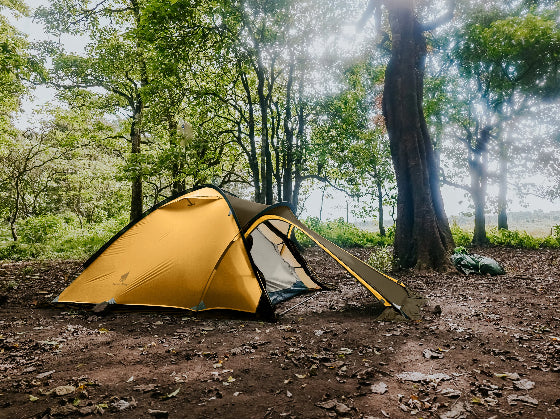
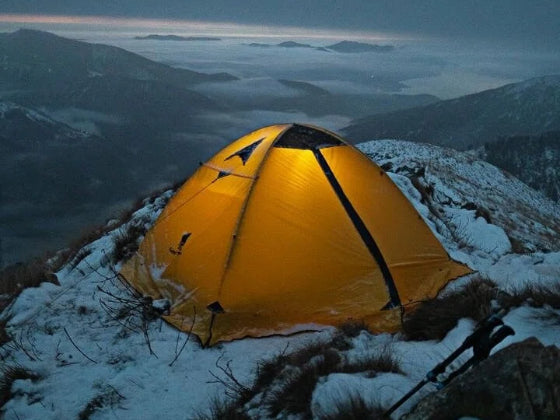
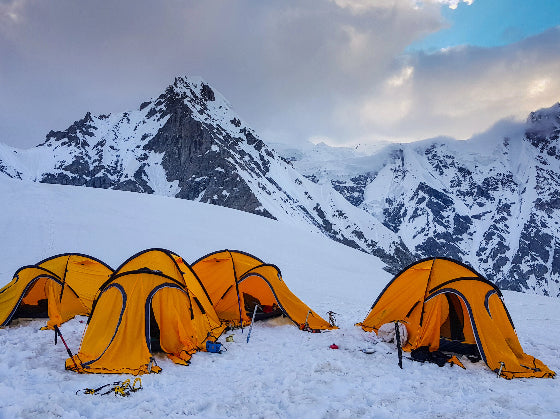
The Geertop Navigator was used by the Belgian professional climbing team "Lad from the green land" during their Mount Everest ascent. It has also been field-tested at 6,840 meters on Chongra Peak in the Himalayas. Those aren't marketing claims; they're verifiable expedition results at serious altitude.
The MSR Remote 2 carries its own proven alpine pedigree, tested on Mount Rainier and across the Columbia Icefields, both demanding environments that punish weak gear without mercy.
In a 2025 technical comparison evaluating the top 10 mountaineering tents on wind resistance, snow-load testing, pole architecture, and field data, the Geertop Navigator scored 8 out of 10. The MSR Remote 2 scored 7.5 out of 10. Both performed well, but the Navigator edged ahead on overall scoring.
Both tents use double-wall construction, which helps with condensation management. Ventilation design and interior volume affect moisture buildup during multi-night high-altitude stays. The MSR's larger vestibule and additional guy-out points give it an advantage in severe, sustained snow loads, particularly during multi-week expedition basecamps where pole architecture and long-term durability are critical.
The Navigator's built-in snow skirt is a meaningful feature at this price point, providing genuine protection against spindrift and wind-driven snow. You can explore the full range of field-tested options, including the Navigator, in the GEERTOP Mountaineering Tent collection.
The Real Cost of Premium: Understanding Diminishing Returns
Here's where the math gets uncomfortable for premium tent buyers. Industry data shows that moving from budget to mid-range tents typically cuts roughly 1.5 lbs for about $250. Moving from mid-range to premium cuts another pound for $400 or more. That means the premium tier charges nearly triple the cost-per-ounce for weight savings compared to mid-range options.
Now apply that to this comparison. The Geertop Navigator is approximately 2.9 lbs lighter than the MSR Remote 2, and it costs $660 less. That completely inverts the typical premium-pays-for-weight narrative. You're paying more and carrying more.
Independent analysis from Thrifty Hiker found that most western-branded mountaineering tents cost approximately three times the Geertop Navigator's price for roughly equivalent specifications. How does Geertop pull this off? The brand was founded in 2016, built its own manufacturing facility in 2017, and runs a factory-direct model. Every tent undergoes 60-plus quality assessments before it ships. The price stays low because there are no middlemen, not because corners are being cut.
That said, the MSR premium does buy something real: over 50 years of alpine engineering heritage, a 3-year warranty, a US-based repair network, and a reputation built on decades of expedition use. For the mountaineer who needs that safety net, it has genuine value.
But here's the honest question: for a weekend alpine climber or someone buying their first mountaineering tent, does that premium translate to meaningfully better outcomes on the mountain?
Who Should Buy Which Tent? A Use-Case Guide
Here are three buyer profiles with honest guidance for each.
The Entry-Level Mountaineer or Weekend Alpine Climber
You're tackling weekend alpine routes, Himalayan trekking peaks, or buying your first 4-season tent. The Geertop Navigator is the clear choice at $169.99 to $199.99. It has been to Everest. It scored 8 out of 10 in independent testing. It weighs less than the competition. Start here.
The Serious Expedition Mountaineer
You're planning multi-week basecamp stays in severe and sustained conditions, on routes where gear failure carries life-safety consequences. The MSR Remote 2 earns its $860 price tag. Its pole system, warranty, and repair network exist for exactly this scenario.
The Shoulder-Season or Below-Treeline Mountaineer
You're not fully committing to 4-season conditions. The MSR Access 2, at roughly $500 to $600, is worth considering as a lighter crossover option at 4 lbs 1 oz.
Consider this: 3.2 million new campers entered the market between 2024 and 2025. Most aspiring mountaineers in that wave are better served starting with a capable, proven mid-range tent than over-investing in expedition gear they may not yet need. The Navigator's Everest and Chongra Peak credentials mean it is not a compromise. It is a legitimate mountaineering tool at an accessible price.
The Verdict: Spend Smart, Climb High
For the vast majority of mountain campers, including serious alpine climbers, the Geertop Navigator delivers genuine 4-season performance at a fraction of the MSR Remote 2's cost. It's lighter, proven at extreme altitude, and scores higher in independent testing.
The MSR Remote 2 is not overpriced for its target user. True expedition mountaineers get real value from its warranty, pole system, and decades of extreme-condition performance.
Quality gear should be accessible to everyone. The mountain doesn't care what you paid for your tent; it cares how well it performs. Start with what you need now, not what you might need someday. And if you're new to Geertop, 15% off your first order makes the entry point even lower.
Stay Wild. Have Fun. Get out there.